
East Haven City Directory Collections
East Haven does not have one confirmed, complete run that can stand for every year. The useful shelf is spread across Hagaman Memorial Library, historical-society material, state and national finding aids, digitized local news, and the Library of Congress telephone collection. The table keeps each set in its own lane. The dates for local directory finding aids are evidence of a catalog or regional run, not proof that every edition is on an open shelf.
| Collection | Years | Where Held | Access |
|---|---|---|---|
| East Haven News local scans | 1939, 1946, 1951, 1952 inspected | Hagaman Memorial Library digital files | Online scans; check the page image against OCR |
| East Haven and regional directory finding aids | 1929-1935, 1934-35, 1937, 1940, 1942, 1950, 1959, 1963, 1965, 1967 listed | Library leads and Allen County catalog material | Edition and image access need confirmation |
| New Haven District telephone directory | January 1931-February 1932 | Library of Congress digital collection | Image and text views; historical phone data only |
| United States city and business directories | Approximately 1749-1990 | FamilySearch collection | Account and collection access rules vary |
| Shepherd and Mansfield Groves | 1996 first edition; expanded 1998 and 2001 | Hagaman and local-history holdings | Compiled secondary source; compare land facts with the Town Clerk vault |
The gaps matter. Exact first and last East Haven-only volumes, publisher order, and the full reverse-directory sequence remain unconfirmed. A regional volume may place East Haven beside New Haven, North Haven, Hamden, or Woodbridge. A missing year does not show that no residents were recorded; it shows that the surviving catalog trail is incomplete.
East Haven Directory Shelf
Hagaman Memorial Library is the best local first call for an East Haven city directory. It is at 227 Main Street, and the listed phone is 203-468-3890. Posted hours are Monday 10:00-5:00, Tuesday through Thursday 10:00-8:00, Friday and Saturday 10:00-5:00, with Sunday closed. Ask staff whether a desired volume is in local history, on microform, in print, or available through a licensed database. The library home page also advertises remote MyHeritage Library Edition access for Hagaman cardholders.
The access path is not only a web search. A cardholder can use the remote database route, a visitor can ask about local-history holdings, and a caller can confirm whether a scan or microfilm reader is available before traveling. Phone or email contact is useful when a surname is hard to read or when an old street label has more than one spelling. If a volume is not held locally, staff may point to a catalog, a State Library guide, an interlibrary-loan option, or a historical society lead.
The East Haven Town Clerk land-record vault is another companion source. Shepherd and Mansfield Groves directs land researchers to Town Hall, where a deed or map can test an address found in a directory. That division of labor keeps the old volume as a dated name-and-place clue while the recorded land file supplies legal conveyance evidence.
The library home page gives the local research route and the cardholder database entry point.
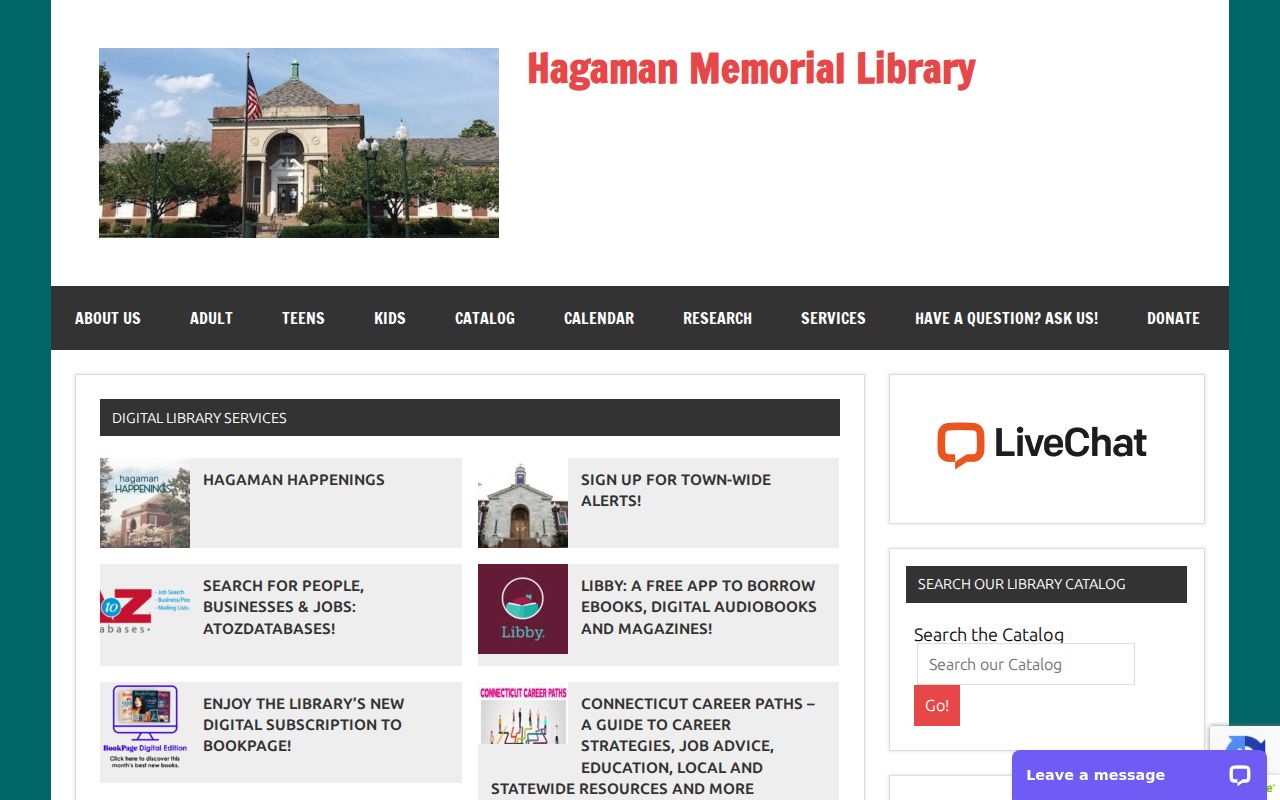
The library image belongs with the collection work because it points to the institution that can explain which local directory or newspaper run survives.
East Haven News as a People Index
Digitized East Haven News issues help fill the years when a formal directory is hard to locate. The inspected files from 1939, 1946, 1951, and 1952 contain dated local names, civic notices, annual-report material, permits, and community references. The June 20, 1946 issue includes a New Haven area directory reference and a description of a large directory, while the April 5, 1951 issue puts town-clerk information, building work, and named residents in a single local context. The August 28, 1952 issue describes the newspaper as exclusively East Haven and places it within a seven-year publication story.
Use a newspaper scan as a pointer, not as a final spelling authority. Record the issue date and page, then inspect the image when OCR turns a surname, street, or initial into a doubtful form. A notice can show that a person appeared in a meeting, permit report, community event, or local story at a particular time. It cannot, by itself, show that the person still lived at the printed address later.
This local-news layer is especially helpful for family history. A directory line may give a bare address, while a dated notice can connect that address with a school, civic group, construction project, or neighborhood term. Keep the two sources separate in notes, then compare them with a deed, census schedule, probate index, or death-record request route.
Note: An East Haven News issue can place a name in a dated event, but it does not prove a later address.
East Haven Directory Runs
The strongest run evidence comes from finding aids. They list East Haven or regional material for 1929-1935, 1934-35, 1937, 1940, 1942, 1950, 1959, 1963, 1965, and 1967. The findings do not confirm an exact first East Haven-only edition, a final local volume, a continuous publisher sequence, or a complete reverse run. Treat the years as a search map. Ask a cataloging librarian for the edition title, publisher, geographic coverage, call number, and whether a name-to-address or address-to-name section is present.
The FamilySearch United States City and Business Directories collection can widen the search. Its documented fields include first, middle, and last name, birth year, city, and state, but account or image access can vary. A FamilySearch hit is a discovery index until the page image and edition details are checked. Search East Haven and nearby New Haven terms when an older locality label may have shifted.
A printed directory can be local, regional, reverse, or telephone-based. Those labels change what a blank result means. A missing surname may reflect an omitted household, a damaged scan, a different geographic volume, or an index that only lists a head of household. It should not be used to declare that no one lived in town during that year.
Reading East Haven Directories
The Library of Congress provides the clearest inspected sample. The New Haven District January 1931-February 1932 volume includes an East Haven locality heading and an image-97 entry that reads, in part, “Sutherland J R,” “prntr,” and “38 Sanford,” followed by an East Haven exchange marker. The telephone number is deliberately omitted here. It is a historical publication field, not a current contact, and should never be copied into a present-day directory as if it were live.
The Library of Congress telephone directory record offers image, text, and collection context. Searchers should save the volume range, locality, image number, and exact printed line. An OCR transcription can help find a name, but the scan controls the spelling, punctuation, abbreviation, and placement.
| Name | Sutherland J R in the inspected sample, subject to image verification |
|---|---|
| Placement | Image 97 and the East Haven locality context |
| Historical occupation abbreviation | “prntr,” a period abbreviation that should be read with the volume’s conventions |
| Address | 38 Sanford as printed in the historical entry |
| Exchange marker | EH, identifying the historical East Haven telephone exchange context |
| Number | Published telephone number is historical only and is not republished as current contact data |
Note: Read the scan's printed line and abbreviation key before treating a historical directory entry as a name or address match.
East Haven Directory Entry Fields
Directory marks work like a compact code. Read the volume’s front matter before interpreting a line, because the same letter can mean a different thing in a telephone book, a household directory, or a reverse volume. A name may be indexed under a head of household, while a street section may place the address first. A historical occupation abbreviation adds context, but it is not a modern status record.
- Criss-cross directory
- An address-order section that lets a researcher move from a street and number toward a named occupant or household.
- Householder index
- A name-led list centered on the person treated by that edition as the household reference point.
- Abbreviation key
- The volume’s guide to short forms for occupations, relationships, exchanges, and address notes; photograph or transcribe it first.
- Directory snapshot
- A dated publication record that can place a person at a location for that edition, without proving a later address.
For a family-history question, write down the printed line exactly, then make a second note that explains what the line can and cannot establish. That habit prevents a clipped initial or old exchange mark from becoming an unsupported identity claim.
Tracing East Haven Directories
Follow a household across directory years in a fixed order. The goal is to see continuity and change, not to force every line into one family. Pair directory years with the public federal census schedule through the available release years, then use deeds, vital-record access rules, probate, newspapers, and cemetery material to test moves, deaths, or household changes.
- Start with a full name, a likely town, and an approximate year. Search the name-led section and record the edition, page, street, and every abbreviation.
- Repeat the search in the next available East Haven or regional year. Note whether the address, initials, household role, or neighborhood label changes.
- Turn to a criss-cross or street-order section when one exists. Compare the address line with nearby names, but do not assume every nearby line is a family member.
- Pair the directory date with a census year, a deed or map, and a dated East Haven News reference. Use the different records to test the same person from different angles.
- Close an older trail with the library, Historical Society, obituary lead, cemetery source, or Probate District 36 index, while keeping the index and any certified record distinct.
A person disappearing from a directory can mean a move, death, an omitted household, a change in publication coverage, or an index error. A dated obituary or probate row can support one explanation, but only the record custodian can establish access to a restricted certificate.
When a historical find needs a present-day record check, the East Haven resident lookup provides the separate court, vital, voter, and credential access rules.
East Haven Directory Timeline
East Haven’s directory story sits inside a longer record history. The town was named in 1707, incorporated in 1785, and ceded Fair Haven, Granniss Corners, and Morris Cove to New Haven in 1881. Those changes help explain why an older entry may use a New Haven locality or a neighborhood name that does not match a current address label.
| Period | Record-keeping clue |
|---|---|
| 1785 | East Haven’s incorporation supplies a local boundary starting point for town-history research. |
| 1881 | Fair Haven, Granniss Corners, and Morris Cove were ceded to New Haven, affecting older locality labels. |
| 1892 onward | SearchIQS availability material lists East Haven recorded maps from January 1, 1892. |
| 1931-1932 | Library of Congress New Haven District telephone directory supplies the inspected East Haven entry sample. |
| 1939-1952 | East Haven News scans supply dated names, notices, permits, reports, and community references. |
| 1996-2001 | Shepherd and Mansfield Groves appears in a first edition and expanded local-history editions compiled by Cliff Nitchke. |
Population scale also changed the meaning of a short directory line. State historical figures move from 1,167 residents in 1900 to 21,388 in 1960, while Census QuickFacts gives a 2020 base of 27,939 and a July 1, 2025 estimate of 27,925. Those numbers describe the setting, not named people. They explain why a single directory edition becomes less complete as the community grows.
Note: East Haven boundary changes explain older locality labels, but a parcel key or deed must test the connection.
East Haven Directory and Historical Society
The East Haven Historical Society operates a museum and research center at the R. Vernon Hays School, 1 Maple Street. Posted access is Wednesdays and the first Saturday of each month, 10:00 a.m.-1:00 p.m., with eh.historical@gmail.com listed for contact. Its themes include historic people, current and closed schools, the Green, Center, Momauguin and Cosey Beach, Foxon, the museum and research center, and the Old Cemetery.
The Society is a place-and-people companion to a dated directory. A photograph, school reference, cemetery clue, or neighborhood name can help explain an entry that gives only a surname and street. Its books and documents link can point to local compilations, but a specific item, reproduction right, or research availability should be confirmed before relying on it.
The Society image shows the local-history institution that preserves the names, places, and community terms used to interpret older directory lines.
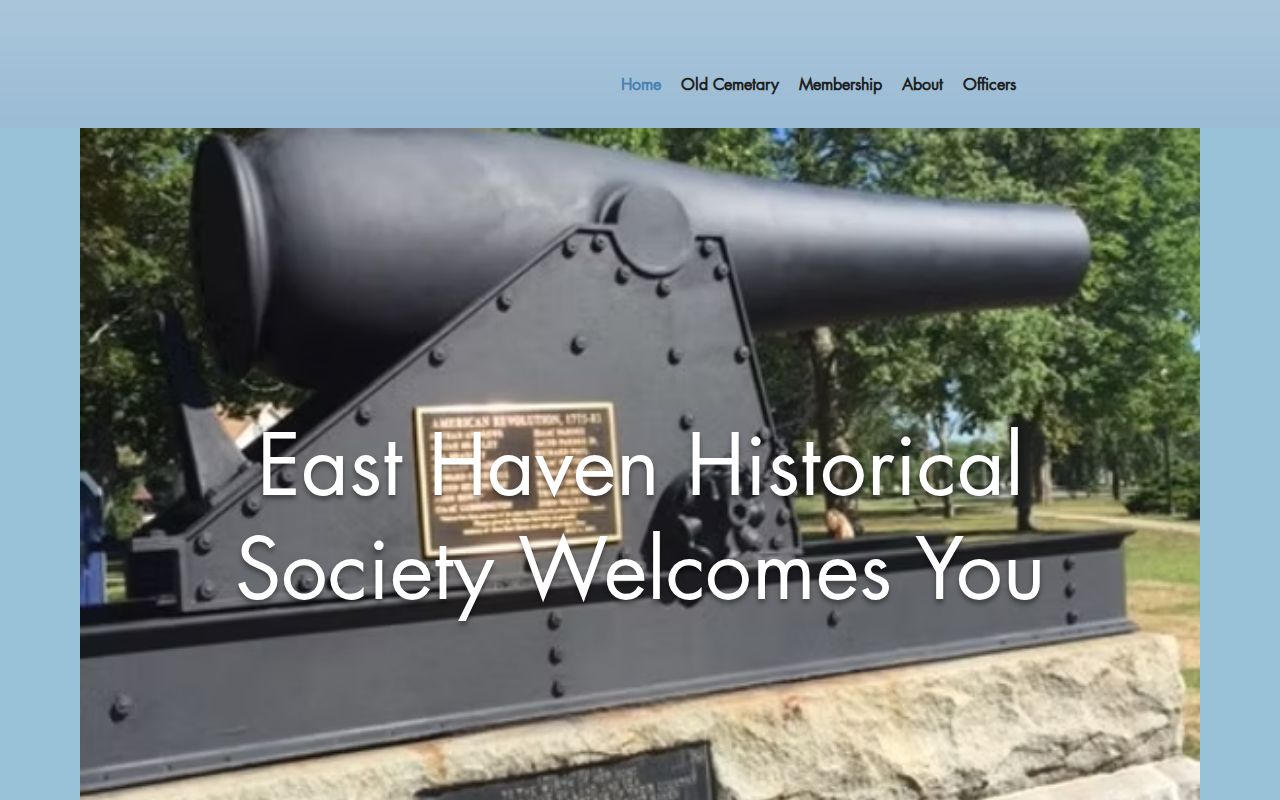
Use the Historical Society for context, then check a name or land reference against the underlying deed, newspaper image, vital route, or cemetery record.
East Haven Directory and State Library
The Connecticut State Library genealogy guides connect East Haven research with census material, directory volumes, newspapers, cemeteries, probate, town histories, and archives. The State Library’s New Haven County court-record project adds older court and administrative finding aids that modern portals may not expose. The reading room is at 231 Capitol Avenue in Hartford, with posted hours of Monday through Friday, 10:00 a.m.-4:00 p.m., and a listed phone of 860-757-6500.
Use the State Library when a local catalog points to a county collection, when an older directory is not digitized, or when a newspaper, probate, cemetery, or court reference needs historical context. Ask whether the item is online, microfilmed, on-site only, restricted, or available through interlibrary loan. A mail or copy request may be possible where the collection permits it.
Keep a research log with the surname, variant spelling, edition, year, locality, page or image, repository, and access date. That record makes a future library call precise and prevents a regional directory clue from being mistaken for a complete East Haven resident list.
Research note. Exact East Haven-only first and last directory editions, complete reverse runs, and several local obituary or yearbook holdings still require confirmation from Hagaman or the Historical Society.